In the vibrant 2026 real estate market of Central Ohio, homeowners often find themselves facing a peculiar obstacle: the “eccentric” floor plan. Whether you are in a historic German Village brick cottage with a bathroom located off the kitchen, or a sprawling mid-century ranch in Upper Arlington that has undergone three decades of uncoordinated additions, selling a house with a weird layout in Columbus requires a specialized strategy. A “weird” layout isn’t just a matter of taste; in real estate terms, it often refers to “functional obsolescence.” This means the physical design of the home no longer aligns with how modern families live, work, and entertain.
Table of Contents
The reality check for many sellers is that today’s buyers—especially the influx of tech professionals moving to the Columbus Intel corridor—prioritize “flow” and open-concept living. When they encounter a “walk-through” bedroom (where you must pass through one bedroom to get to another) or a staircase that terminates in a closet, their first instinct is to calculate the cost of a sledgehammer. However, having a quirky home doesn’t mean you are stuck. Columbus is a city that celebrates character. From the narrow “shotgun” homes in Franklinton to the vertical labyrinths of Victorian Village, there is a buyer for every floor plan—provided you know how to position the property correctly.
The goal of this guide is to transform your home’s “awkwardness” into “personality.” We will explore how to strategically stage these spaces to define their purpose, how to market them without scaring off potential leads, and when it makes more sense to sell my house as is Columbus Ohio rather than trying to fix a fundamental architectural flaw. By understanding the local market dynamics and buyer psychology, you can navigate the complexities of selling a house with a strange layout and achieve a successful, stress-free closing.
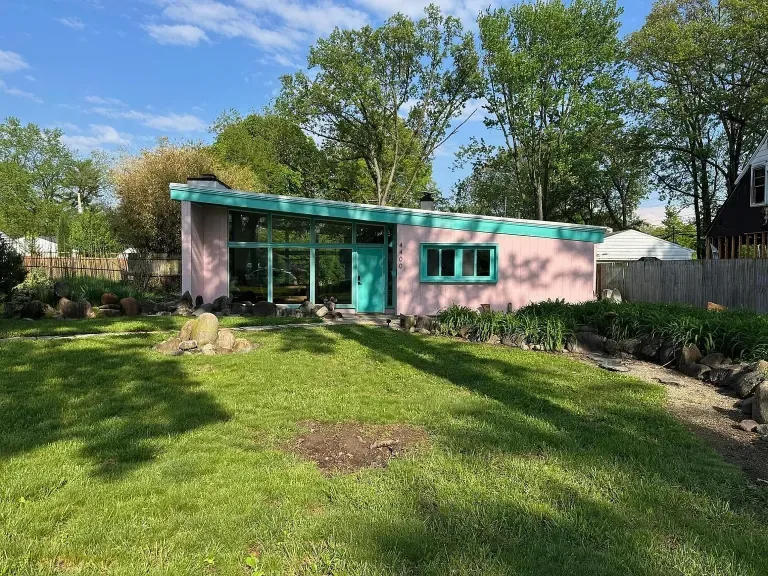
Why Does Your House Have a Strange Layout?
To successfully sell a property, it helps to understand why it is the way it is. This allows you to explain the home’s history to buyers, often softening the “weird” factor by turning it into a “historical quirk.” In Columbus, several factors contribute to the prevalence of non-traditional floor plans.
1. The Legacy of Historical Additions
Many of our most beloved neighborhoods, like Clintonville and Beechwold, feature homes built in the early 20th century. Over the last 100 years, owners added “bump-outs” for indoor plumbing, sunrooms that were later enclosed to become bedrooms, and “mother-in-law” suites. Because these were often built one at a time without the oversight of a master architect, the resulting floor plan can feel like a jigsaw puzzle. You might find a window that looks into an interior hallway or a kitchen that feels isolated from the rest of the living space.
2. The “DIY” Renovation Era
The late 1970s and 80s saw a surge in DIY home improvements across Franklin County. Before modern permitting and inspection digital tracking existed, many homeowners moved walls, added DIY basements, or converted garages into “bonus rooms” without considering the overall flow of the house. This frequently resulted in “step-downs” into rooms with low ceilings or awkwardly placed structural pillars in the middle of a living area.
3. Zoning and Narrow Lot Constraints
In dense areas like Olde Towne East or the Short North, narrow “railroad-style” lots forced builders to go long and thin. This leads to the “telescoping” effect where rooms are strung together in a single line. While this was efficient for the 19th-century heating methods, it creates privacy issues for 2026 residents who aren’t used to walking through a dining room to get to the only full bathroom.
4. Functional Obsolescence Data
In the world of appraisals, a “weird layout” is officially categorized as Functional Obsolescence. Here is how it typically breaks down in a Columbus appraisal:
| Feature | Type of Obsolescence | Common Columbus Example |
|---|---|---|
| Curable | Layout can be fixed at a reasonable cost. | Removing a non-load-bearing wall to open a kitchen. |
| Incurable | The layout is too expensive or impossible to fix. | A bathroom that can only be reached by going through the garage. |
| Super-adequacy | Features that exceed market needs but hurt flow. | A massive industrial kitchen in a tiny 1-bedroom cottage. |
Understanding these origins helps you decide if your house just needs better furniture placement or if you should look for a buyer who specializes in “fixer-upper” challenges.
Strategic Staging: Helping Buyers “Visualize” the Space
When selling a house with a weird layout in Columbus, staging is not just about aesthetics—it is about psychological warfare against confusion. If a potential buyer walks into a room and asks, “What would I even do with this space?”, you have already lost them. In 2026, Columbus buyers are looking for “clarity and comfort.” They want to see exactly how their lives fit into your home’s unique footprint.
Defining Purpose for Every Nook and Cranny
The most common mistake sellers make is leaving awkward spaces empty. An empty, strangely shaped corner looks like a “problem,” but a corner staged with a small desk, a sleek task lamp, and a floating shelf becomes a “high-productivity home office.” This is particularly effective in Clintonville bungalows where stairway landings or deep closet alcoves can be rebranded as “work-from-home nooks.”
The “Zone” Strategy: Use area rugs to anchor furniture and define boundaries in rooms that lack walls. In large, undefined L-shaped living rooms common in Gahanna or Reynoldsburg, two separate rugs can signal a “conversation zone” and a “reading library,” making the layout feel deliberate rather than accidental.
Scale and Proportion: Avoid oversized furniture that “chokes” narrow rooms. In 2026, the trend in Columbus is minimalist yet functional staging. Opt for “apartment-sized” sofas and transparent acrylic coffee tables that provide utility without blocking the visual flow of a “railroad-style” floor plan.
Curved Furniture for Flow: One of the top staging trends for 2026 is the use of rounded furniture. Arched mirrors, circular dining tables, and curved sofas can soften the sharp, awkward angles of a home and help “guide” the buyer’s eye through the space more naturally.
Lighting Hacks for Windowless Rooms
Many older Columbus homes have “middle rooms” that lack natural light due to previous additions. To combat the “cave-like” feel that turns off buyers:
- Layered Lighting: Combine floor lamps, table lamps, and LED strip lighting behind monitors or under shelves to eliminate dark corners.
- Strategic Mirrors: Place a large mirror opposite the nearest light source (even if it’s in the next room) to bounce brightness into the darker area.
- Sheer Window Treatments: Replace heavy drapes with light-filtering sheers to maximize every bit of Ohio sunshine.
Case Study: The “L-Shaped” Success in Upper Arlington
A homeowner in Upper Arlington struggled to sell their home because the primary living area was a giant, awkward “L” that felt cold and cavernous. After sitting on the market for 45 days, they hired a stager who used two distinct area rugs and a modular sofa to “divide” the room into a TV lounge and a sophisticated music corner with a record player and two accent chairs. The home went into contract within 72 hours of the re-listing, proving that selling a house with a weird layout in Columbus is entirely possible once the “logic” of the floor plan is visible.
| Staging Element | Impact on Buyer Perception | Best Neighborhood Use Case |
|---|---|---|
| Area Rugs | Creates “invisible walls” and defines room purpose. | German Village (Open lofts) |
| Small-Scale Desks | Highlights “Work from Home” potential in small nooks. | Clintonville (Older bungalows) |
| Mirrors | Expands narrow hallways and brightens dark rooms. | Victorian Village (Tall/Narrow homes) |
| Minimalist Decor | Reduces visual clutter to emphasize square footage. | Franklinton (Modernized cottages) |
Pro Tip: If you have a room that is truly “un-stageable” due to its shape, consider AI-powered virtual staging. In 2026, many Columbus realtors use these tools to show buyers three different ways a “weird” room could be used, ranging from a nursery to a hobby room.
Marketing Secrets for Weird Houses
When you are selling a house with a weird layout in Columbus, your marketing strategy needs to pivot from “broad appeal” to “targeted storytelling.” In the 2026 real estate landscape, transparency is actually your greatest asset. Trying to hide an awkward floor plan with creative photography usually backfires, leading to frustrated buyers and wasted showings. Instead, use modern technology and clever copywriting to find the specific buyer who will view your home’s quirks as “character.”
Stop Hiding the Layout: The Power of 3D Tech
In 2026, high-end 3D virtual tours like Matterport have become the standard for unique properties. While it might seem counterintuitive to show off a strange layout before a buyer even steps inside, it serves as a critical filter.
- Filter Out the “Wrong” Buyers: You don’t want 50 showings with people who leave complaining about the “walk-through” bathroom. You want the 5 buyers who saw the 3D tour, understood the layout, and said, “I can make that work.”
- The “Dollhouse” View: These tools provide a 3D perspective that allows buyers to see how rooms stack and connect. For a vertical home in Victorian Village or a rambling addition-heavy ranch in Galloway, this visual clarity is invaluable.
Creative Copywriting: The “Quirk” Translator
The words you choose for your listing description can change the entire vibe of the property. In the Columbus MLS, certain words act as signals to different types of buyers. Instead of using “defensive” language, use “aspirational” language.
| Instead of Saying… | Try This 2026 Term… | The Psychological Shift |
|---|---|---|
| “Awkward Room” | “Creative Flex Space” | Positions the room as an opportunity (Gym, Studio, Nursery). |
| “Small/Narrow” | “Intimate & Efficient” | Appeals to the “Tiny Home” or minimalist movement. |
| “Old/Dated Layout” | “Historical Character” | Connects the house to Columbus’s architectural heritage. |
| “Strange Flow” | “Artistic & Non-Traditional” | Appeals to buyers looking for something that isn’t a “cookie-cutter” suburban box. |
Lifestyle Selling in the Short North and Beyond
If the interior layout is the “weakness,” lead with the “strength.” In 2026, lifestyle marketing is king. If you are selling a house with a weird layout in Columbus that happens to be three blocks from the Short North Arts District, your marketing should focus on the walkability, the local coffee shops, and the vibrant nightlife.
- Lead with the Best Feature: Is there a massive rooftop deck? A private courtyard? A 3-car garage (a rarity in Olde Towne East)? Make that the hero of your listing.
- The “Artist’s Retreat” Angle: Many buyers in the Columbus creative community—musicians, painters, and freelancers—actually prefer non-traditional spaces. Market the home as an “Urban Sanctuary” or a “Creative Loft-Style” residence.
Provide a “Map” for the Buyer
Always include a professional 2D floor plan with clear measurements in your listing photos. Buyers in 2026 are data-driven. They want to know if their king-sized bed will fit in the master or if their sectional sofa can navigate the narrow living room. By providing this information upfront, you build trust and project a sense of “nothing to hide.”
Expert Insight: “In a market like Columbus, where inventory remains tight in 2026, ‘unique’ is often just another word for ‘opportunity.’ The key is reaching the buyer who values soul over symmetry.” — Columbus Luxury Listing Agent
The Financial Impact: What to Expect on Your Bottom Line
When selling a house with a weird layout in Columbus, you must confront the mathematical reality of “Functional Obsolescence.” In appraisal terms, this is a reduction in the usefulness or desirability of a property because of an outdated or awkward design feature that cannot be easily changed. In the 2026 Columbus market, where the median home price has climbed to approximately $335,000, an awkward floor plan can result in a significant “adjustment” during the appraisal process.
The “Awkwardness” Discount in Franklin County
Data from early 2026 indicates that homes with significant layout issues in Central Ohio typically sell for 5% to 15% less than comparable homes with traditional floor plans. However, this discount varies based on the “severity” of the layout quirk. A “curable” defect, like a wall that can be removed for $2,000, will have a much smaller impact than an “incurable” defect, such as a primary bedroom located in a finished basement without a nearby bathroom.
Appraisal Adjustments for Layout Issues (2026 Estimates):
| Layout Quirk | Estimated Value Impact | Difficulty to Fix |
|---|---|---|
| Walk-through Bedroom | -8% to -12% | High (Requires structural changes) |
| Kitchen in Basement/Isolated | -10% to -15% | Very High (Plumbing/Gas lines) |
| No Bathroom on Main Floor | -5% to -7% | Medium (Can often add a half-bath) |
| Laundry in Bedroom/Kitchen | -2% to -4% | Low (Easy to relocate) |
The Cost vs. Reward of Renovating Before Selling
Many homeowners wonder: “Should I move this wall before I list?” In Columbus, the 2026 Development Related Fee Schedule shows that even simple alterations for a 1-3 family dwelling require a building permit starting at roughly $385, plus inspection fees.
According to recent Angi data, a major kitchen remodel in Columbus can cost upwards of $40,000, while a bathroom addition ranges from $25,000 to $29,000. If your house is in Worthington, where home values are high, spending $25,000 to add a bathroom might net you a $40,000 increase in sale price. However, if the home is in a neighborhood where prices have hit a ceiling, you may never recoup that investment.
Appraisal Challenges with “Unconventional” Comps
Real estate appraisers rely on “Comps” (comparable sales) from the last 6 months. If you are selling a house with a weird layout in Columbus, finding a “match” for your unique floor plan is difficult.
- The “Bracket” Method: Appraisers will often “bracket” your home by comparing it to one home that is slightly better (a standard layout) and one that is slightly worse (perhaps a smaller home or one in worse condition). You can examine recent property assessments and sales records through the official Franklin County Auditor.
- Market Time Adjustments: In April 2026, the median days on market in Columbus is around 46 to 49 days. If your unique home takes 80 days to sell, the appraiser may view this as a sign that the market is rejecting the layout, further lowering the appraised value.
Key Takeaway: Before investing in major renovations, consult with a professional who understands the local ROI. In many cases, it is more financially sound to sell a house as-is in Columbus Ohio rather than pouring money into a layout that might still be “weird” even after the repairs.
Option 1: The Traditional Market Route
If you decide that your home’s unique charm outweighs its “awkwardness,” the traditional market route—listing with a Realtor on the Columbus MLS—is your path to finding a retail buyer. However, selling a house with a weird layout in Columbus via the traditional method requires more than just a “For Sale” sign; it requires a strategic, high-touch approach to prevent the property from becoming “stale” on the market.
Finding the “Right” Columbus Realtor
Not all real estate agents are equipped to sell a non-traditional home. You need an agent who has a track record in historic or architecturally significant neighborhoods like German Village, Victorian Village, or Olde Towne East.
- Experience with “Difficult” Floor Plans: Ask potential agents for examples of houses they’ve sold with similar challenges.
- Network of Creative Buyers: Top Columbus agents often have a “pocket list” of buyers—artists, architects, and designers—who specifically seek out homes with “soul” and unconventional spaces.
- The “Value-Add” Specialist: Look for an agent who can speak fluently about renovation potential, helping buyers see how a $5,000 partition could solve a privacy issue.
The “Guided Tour” Open House Strategy
In a standard home, buyers walk through on their own. For a house with a strange layout, the “Guided Tour” is essential. Your agent should be present to “narrate” the flow of the home.
- Addressing Concerns Early: If a buyer looks confused by a room’s purpose, the agent can immediately point out, “The current owners use this as a sun-drenched yoga studio, but it’s also been a perfect nursery.”
- Highlighting Modern Amenities: In 2026, many buyers will overlook a weird layout if the “bones” are updated. The agent should emphasize the 2024 roof, the high-efficiency HVAC system, or the EV charging station in the garage.
Patience and the “Days on Market” Reality
It is a statistical fact in Franklin County that unique homes often take longer to sell. While a cookie-cutter colonial in Hilliard might sell in a weekend, a “one-of-a-kind” home in Clintonville may stay on the market for 60 to 90 days.
- Don’t Panic Price-Drop: If the home doesn’t sell in the first two weeks, it’s often because you haven’t found the “niche” buyer yet, not necessarily because the price is too high.
- Refresh the Listing: Every 30 days, consider changing the “hero shot” (the main photo) of the listing to highlight a different unique feature, like the backyard or a specific architectural detail, to catch the eye of new browsers.
Option 2: Selling “As-Is” to a Columbus Cash Buyer
For those who don’t have the time or the patience to wait for a “soulmate” buyer, the most efficient solution is to sell a house as-is in Columbus Ohio to a professional cash home buyer. If you have inherited a house in Ohio and how to sell it for cash, this route can spare you from performing costly structural overhauls or managing complicated family estates. This is often the preferred route for homeowners who have inherited a property with an unworkable layout or those who need to relocate quickly for the 2026 Intel expansion or other job opportunities.
The Stress-Free Alternative
A cash investor doesn’t look at a house the same way a family does. They aren’t worried about whether their sofa fits in the living room or if the walk-through bedroom is inconvenient for children. They view the property as a “redevelopment project.”
- No Staging Required: You don’t need to buy rugs or hire photographers.
- No Appraisal Gaps: Because cash buyers don’t use bank financing, you don’t have to worry about a “low appraisal” due to functional obsolescence.
- Closing in Days, Not Months: In the current Columbus market, a cash buyer can typically close in 7 to 14 days, allowing you to move on from the property’s layout headaches almost instantly.
Why Investors Love “Weird” Houses
Professional house flippers in Columbus actually seek out homes with strange layouts because they represent the highest “Value-Add” potential. They have the crews and the capital to move load-bearing walls, relocate plumbing, and “fix” the flow of the home to meet 2026 standards. By selling to them, you are essentially “outsourcing” the renovation headache.
| Feature | Cash Buyer (Investor) | Traditional Buyer (Retail) |
|---|---|---|
| Inspection | Often Waived / “Info Only” | Strict (Can kill the deal) |
| Financing | Cash (Guaranteed) | Mortgage (Depends on Appraisal) |
| Repairs | Buyer handles everything | Seller usually asked to fix |
| Convenience | High (Sell in “ugly” state) | Low (Requires cleaning/staging) |
Frequently Asked Questions (FAQs)
When selling a house with a weird layout in Columbus, homeowners often have specific concerns about the legality and logistics of their unique floor plans. Here are the most common questions answered by local real estate experts.
Will a bank finance a house with a weird layout?
Generally, yes, as long as the home meets minimum habitability standards. However, banks are wary of “Functional Obsolescence.” If a house lacks a traditional kitchen or has a bedroom that can only be accessed by walking through another bedroom, the appraiser may flag it. In 2026, FHA and VA loans have stricter requirements regarding “egress” (exit paths). If the layout is deemed unsafe or highly impractical, the bank may deny the loan, making a cash buyer your best option.
Does a “weird” layout count as a material defect in Ohio?
Under Ohio law, a “material defect” usually refers to physical or structural issues like a cracked foundation or toxic mold. An awkward layout is a design choice or a result of historical architecture, not necessarily a defect. However, if the layout violates current City of Columbus building codes (such as a bedroom without a window/egress), that must be disclosed to potential buyers.
Can I change my layout without a permit in Columbus?
If you are moving or removing walls, especially load-bearing ones, or changing plumbing and electrical locations, you must obtain a permit from the City Building and Zoning Services department. In 2026, the city has increased inspections for “unpermitted work.” Selling a home with “DIY” layout changes that weren’t permitted can lead to major legal headaches and may even cause a sale to fall through during the title search.
What is the “railroad” layout and why is it common in Ohio?
A “railroad” or “shotgun” layout is a floor plan where rooms are aligned in a straight line without a hallway. You must walk through one room to get to the next. These are incredibly common in historic Columbus neighborhoods like Franklinton and German Village because they were designed for narrow urban lots and cross-ventilation before air conditioning was invented. While they are “weird” by modern standards, they are often highly sought after by buyers looking for authentic historic charm.
Conclusion: Finding the Perfect Match
Selling a house with a weird layout in Columbus doesn’t have to be a nightmare. The 2026 real estate market in Central Ohio is diverse enough to accommodate everything from sleek modern condos to quirky 100-year-old cottages. The key is to stop viewing your home’s layout as a “flaw” and start viewing it as a “feature” for a specific type of buyer.
Summary Checklist for Your Sale:
- Stage to Define: Use rugs and furniture to tell the buyer exactly what each space is for.
- Market with Honesty: Use 3D tours and floor plans to find buyers who are already comfortable with the layout.
- Price it Right: Account for the “clutter” or “layout” discount in your initial listing price to avoid sitting on the market.
- Know Your Exit: If the stress of staging and showing is too high, remember that you can always sell my house fast Worthington Ohio to skip the traditional market hassle.
Every house has a “soulmate” buyer. Whether it’s an artist looking for a “funky” studio space or an investor looking for a renovation project, your property has value. By following the strategies outlined in this guide, you can confidently navigate the Columbus market and move on to your next chapter with ease.
